Washing Machine Odor Remover: How to Remove That Smell From Your Front Load Washer (and Keep Laundry Fresh)
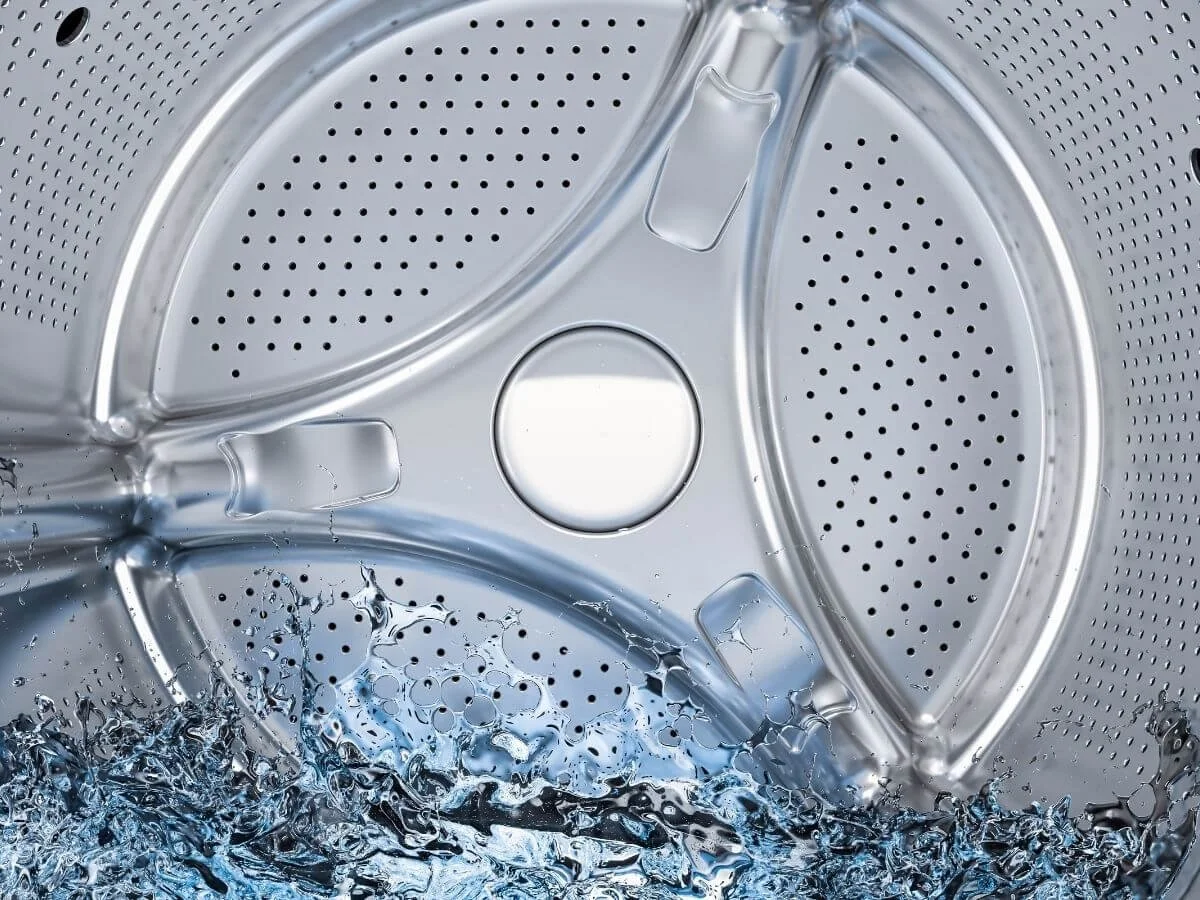
Washing machine drum buildup: A cleaning cycle helps break down residue and detergent deposits that can cause lingering odor—so every wash leaves laundry fresher.
If your washing machine has a funky odor, you’re not alone. That “why do my towels smell worse after a wash?” moment usually means hidden residue, trapped moisture, and old detergent buildup are hanging out where you can’t see them. The good news: you can remove the source of the scent problem and get back to clean, fresh clothes without guessing.
In this guide, you’ll learn why a washer gets musty, what to clean (and how), which wash cycle matters most, and the simple routine that helps keep your machine performing like it should—especially if you own a front load unit.
Why does my washing machine smell even after a wash?
A washing machine can develop odor even when you wash regularly because the inside stays damp and collects gunk over time. That gunk is usually a mix of leftover detergent, skin oils, lint, and grime that turns into residue. When that residue sits in warm, wet places, it can turn moldy, feed mold, and create that sour, stale smell.
Another common cause is using too much detergent. Extra soap doesn’t always rinse away during a wash cycle—it can cling to the drum, the gasket, and the dispenser, making it harder to clean and easier for funk to stick around. If you’re dealing with persistent odor problems, it’s a sign the machine needs a deeper reset, not just another load of laundry.
How do odor-causing residues build up in the washer over time?
Those sneaky odor-causing residues build up in places the water doesn’t fully flush: behind the rubber folds, under the seal, and around the edges of the drum. Every cycle leaves a tiny film behind—especially cooler, faster programs that don’t rinse aggressively. Over weeks, that film becomes stubborn buildup that’s tough to remove with normal washing.
Fabric softener and certain pods can add to the problem, too—think sticky scum that traps lint and dirt. If your machine has a “tackle stains” setting you love, that’s fine, but you still need a periodic deep clean to keep the inside truly clean.
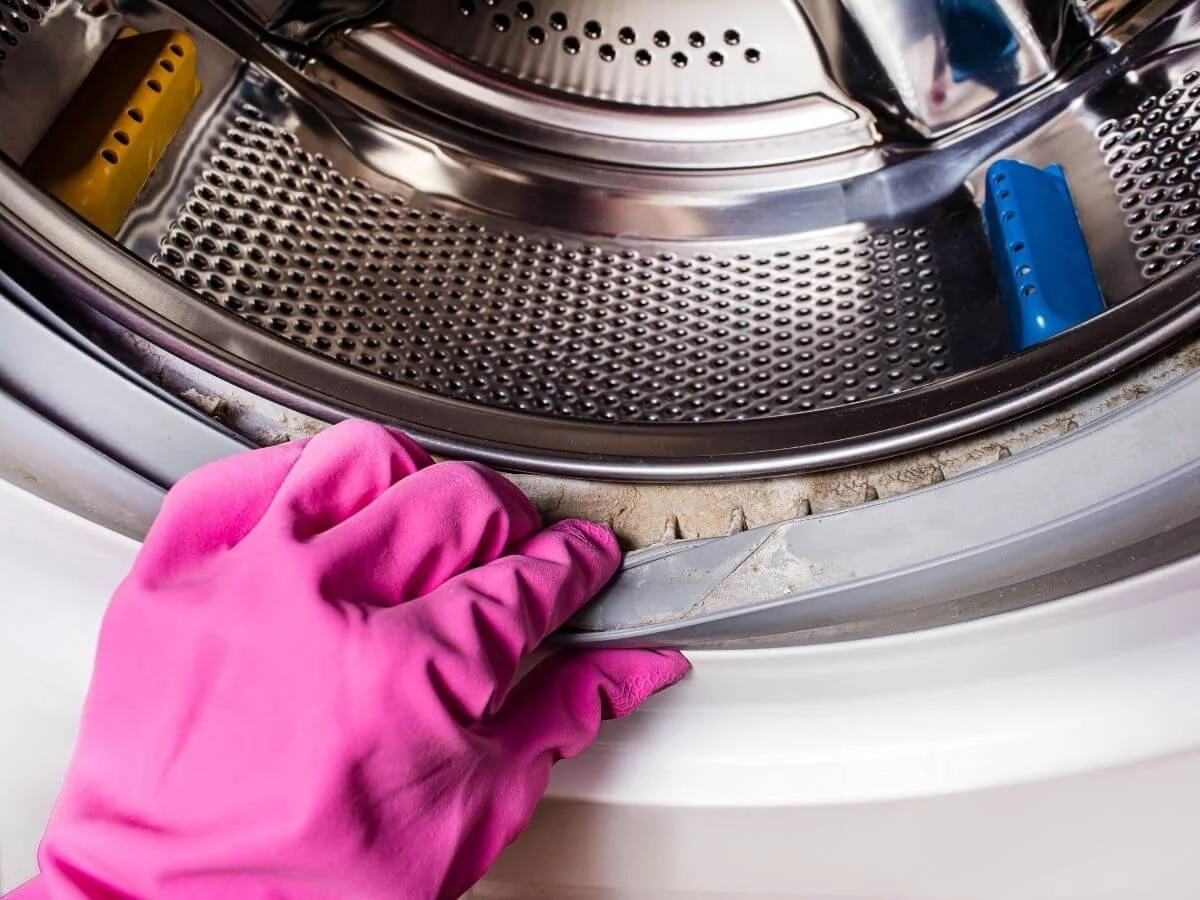
Don’t forget the gasket: Wipe the rubber door seal and inner rim to remove trapped residue and debris—one of the most common sources of that musty washing machine smell.
Front load washers: what’s different about the gasket, rubber seal, and door area?
Front load machines are efficient, but the design creates more places for moisture to trap. The gasket (also called the rubber door seal or rubber seal) can hold water in its folds—especially if small bits of debris and lint get tucked in there. That dampness is a perfect setup for mildew and a lingering odor.
A simple habit helps a lot: when the cycle is complete, leave the door open. Even cracking the washer door slightly (a true “door open” habit) lets moisture evaporate and helps keep the machine easier to clean. If your household has kids or pets, check your manual for safe ventilation tips, but airflow is a huge win for keeping that stale smell away.
Quick checklist to eliminate smell and keep your washer clean
If you want to eliminate the odor fast, focus on the spots that cause most issues:
Wipe the gasket and inner rim with a damp cloth (or a towel) and wipe inside the folds where water sits.
Check the dispenser area for sticky detergent film and rinse it if your model allows. Follow the instruction in your owner’s guide.
Look for lint or debris near the bottom edge of the door and around the seal.
Run a dedicated cleaning cycle with a washing machine cleaner to get rid of hidden grime.
This combination keeps things clean between deeper maintenance sessions, and it helps keep the inside from turning smelly again.
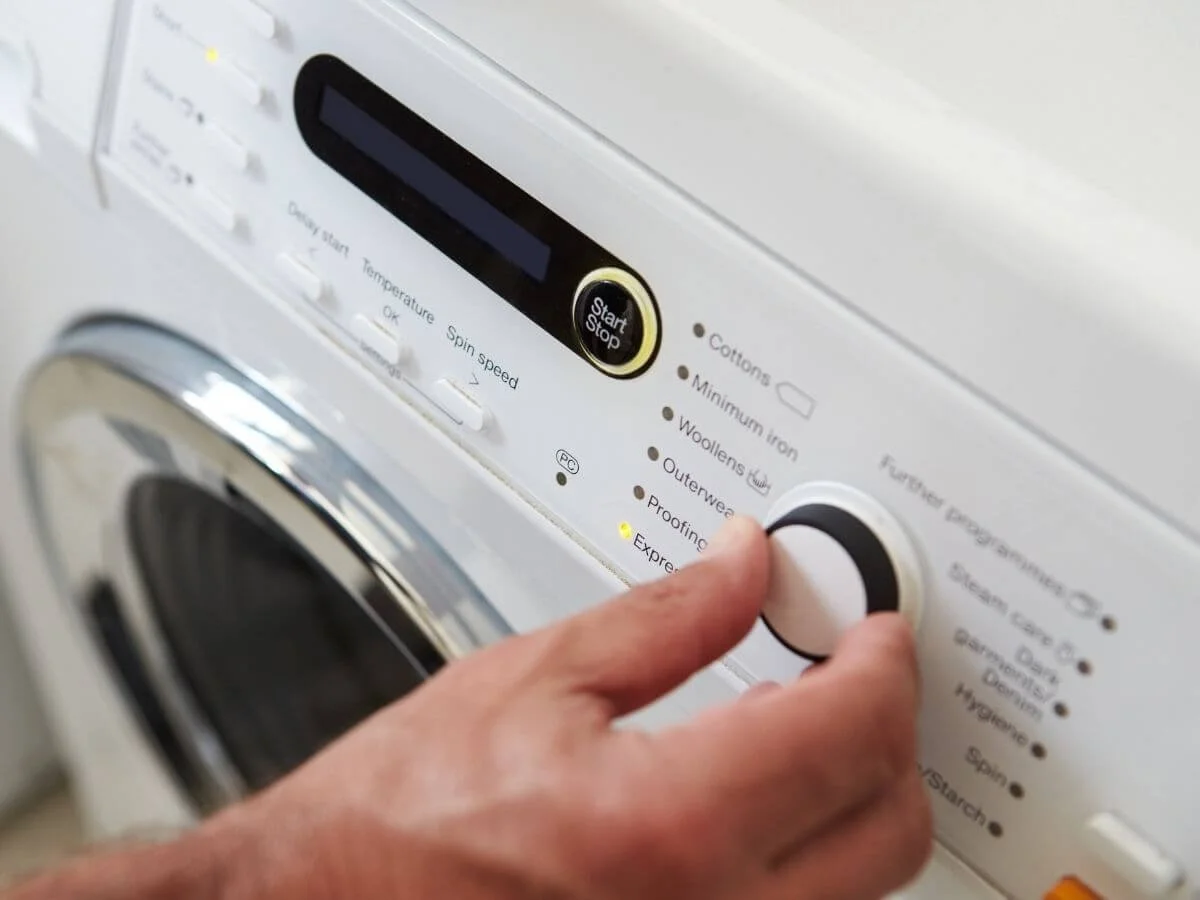
Run the right cleaning cycle: Choose your washer’s “tub clean” (or hottest, longest cycle) with a washing machine cleaner to remove residue and odor so every wash leaves laundry fresher.
Which cycle should you run to deep clean your washing machine?
The most effective approach is to run a “tub clean” or “clean washer” setting if your manufacturer includes it. If not, choose the hottest, longest cleaning option available—many machines label it as a sanitation-style cycle. You want enough time and water action to break up residue and flush it out.
Use a washing machine cleaner specifically designed for this job, because it’s built to remove the stuff normal wash routines don’t touch. Drop the cleaner in the drum and run the cleaning cycle. (Think: drum and run—that’s the simple rule.) Doing this periodically can help keep the machine clean and working effectively.
Use hot water only if your machine’s cleaning setting supports it and your manual recommends it. For everyday laundry, cooler temps can be fine, but cleaning the machine itself usually needs a stronger approach.
Do vinegar or bleach actually remove washing machine odor?
You’ll hear two popular DIY solutions: vinegar and bleach. They can help in some cases, but they’re not always the best long-term routine.
Vinegar may break down light film and reduce mild odor, but it isn’t always strong enough for heavy residue or thick buildup.
Bleach can kill mold and sanitize, but it must be used carefully. If your manufacturer allows it, you might run a cleaning cycle with chlorine bleach (some instructions call for a cup of bleach). Never mix bleach with other products, and don’t use it if your model warns against it—rubber components can be sensitive to harsh use.
If you’ve tried these and the smell returns, a dedicated washing machine cleaner is usually more consistent—especially for ongoing maintenance.
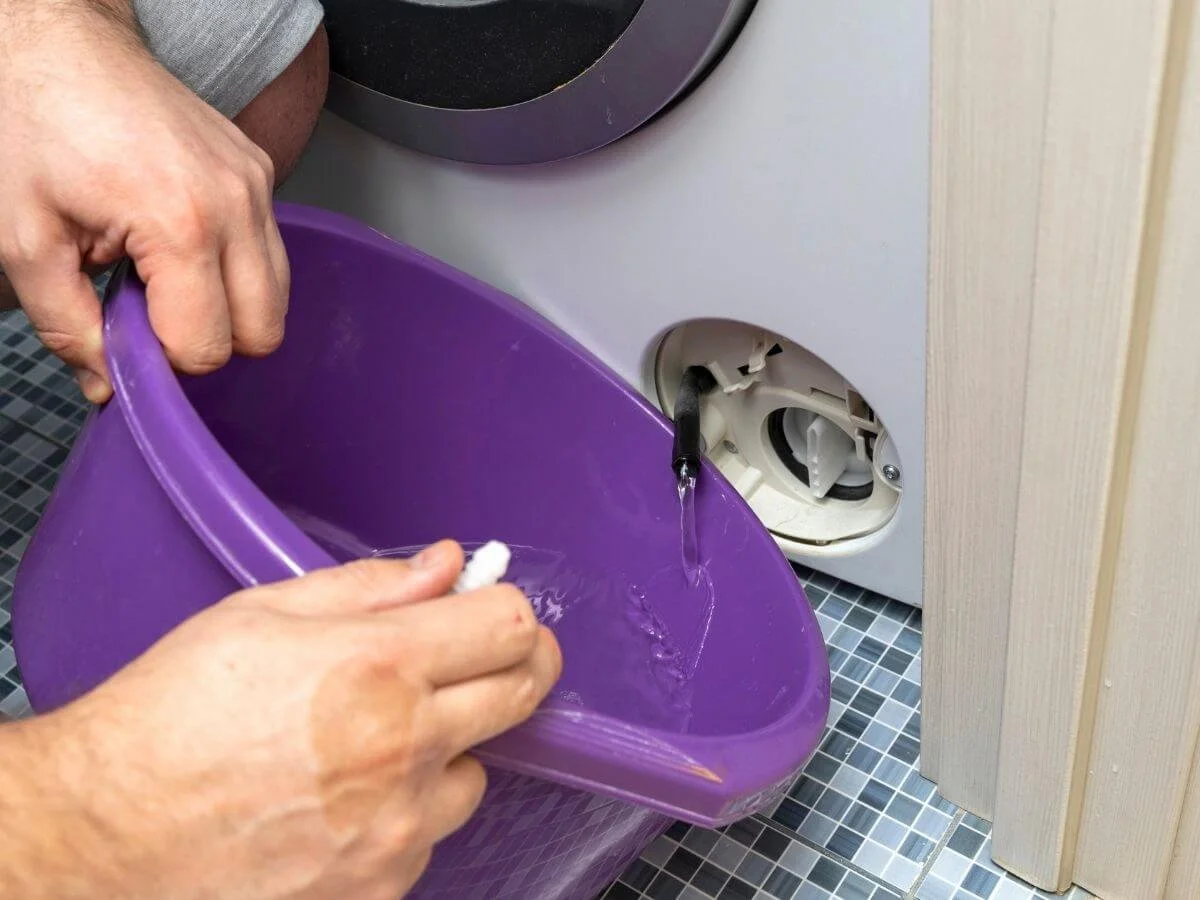
Clean the pump filter: Removing debris and trapped residue from the filter helps eliminate lingering odor, improves draining, and keeps your washer from turning smelly between cycles.
How to clean the filter and pump filter (and why it matters)
Many people ignore the filter, but it’s a common source of lingering odor. A clogged pump filter can hold stagnant water, lint, and gunk that causes a musty funk. If your model has an access panel, follow the instruction steps for safe cleaning—have a towel ready because some water may spill.
When you clean the filter, look for coins, hair, and other debris. This also helps prevent a clog that can mess with draining and leave the inside wet longer than it should. Keeping the filter clean can make every wash work better and help keep laundry fresher.
What if the odor isn’t the washer: drain hose, plumbing, and p-trap issues
Sometimes the bad odor isn’t coming from the washing machine itself. A drain hose can hold funky water if it’s installed incorrectly or has a kink, and you can also get smell backflow from plumbing if the system isn’t set up to trap odors properly. In rare cases, a dry p-trap or poor venting can let sewage smells creep up.
If you suspect a plumbing issue, it’s worth a quick inspection and, if needed, consult a plumber—especially if your machine area smells bad even when you haven’t run a cycle. This is also relevant if the machine drains slowly or you see standing water where it shouldn’t be.

Clyrio washer cleaner tablets: Use one tablet in a cleaning cycle twice a month to remove odor-causing residue and keep your washing machine smelling fresh—24 tablets = up to a year supply for most homes.
How often should you use a washing machine cleaner to keep laundry fresh?
For most households, a monthly cleaning cycle is a great baseline—more often if you do a ton of laundry, have sweaty gym clothes, or notice recurring smell. Many people aim for “twice a month” because it keeps the washer consistently clean without being a hassle.
If you’ve used products like affresh, you already know the idea: regular cleaning prevents residue from becoming a stubborn mess. The key is consistency—maintenance beats emergency scrubbing every time.
A simple routine also helps:
Don’t use too much detergent.
Remove wet clothes promptly so the inside doesn’t stay wet.
Keep airflow by letting the door stay cracked (again: leave the washer door open when it’s safe to do so).
These steps help keep your loads smelling better and support fresh-smelling laundry.
A simple routine with Clyrio to keep your washing machine smelling fresh
If your goal is a reliable washing machine odor remover routine that you can stick with, Clyrio is designed to make that easy. Clyrio is a washing machine cleaner tablet you run in an empty machine cleaning cycle to help remove the gunk that causes recurring odor. It’s also easy on your schedule: Clyrio comes as a 24-pack—often a “one-year supply” if you clean your machine twice a month (and for many households, it lasts longer than a year).

Clyrio in action: Drop one tablet into the drum and run a cleaning cycle—Clyrio was specifically designed to remove foul-smelling odors from your washing machine and keep your washer clean between washes.
Here’s the routine:
Make sure the machine is empty.
Place one tablet in the drum.
Run your cleaning cycle (or the hottest/longest clean setting recommended in your manual).
After the cycle finishes, wipe the door rim quickly if needed and let airflow in.
That’s it. When you keep up with a cleaner routine, your washing machine stays fresher, your laundry smells better, and you spend less time chasing that musty smell. If you want to grab Clyrio, use the Amazon links on Clyrio.com so you’re getting the correct brand and the 24-count pack.
And if you’re wondering what “success” feels like: it’s your washing machine smelling fresh again—without having to guess which hack will work this week.
Key takeaways to remember
A recurring odor usually comes from hidden residue and moisture, not your clothes.
Front load machines need extra attention around the gasket and rubber folds.
Run a dedicated cleaning cycle to deep clean—a normal wash isn’t enough.
Check and clean the filter/pump filter to prevent trapped gunk and draining issues.
Avoid using too much detergent, and let airflow in after a cycle when safe.
A consistent routine with a washing machine cleaner like Clyrio helps eliminate the problem and keep your washer clean long-term.